
S1 Self-esteem
L
You are harsh on yourself and rarely believe praise on the first try.
SBTI Type
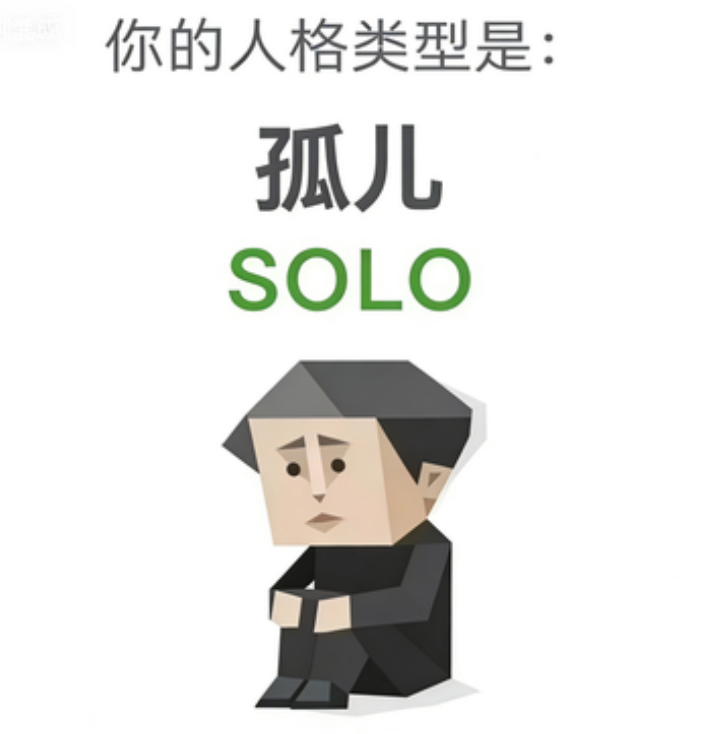
The Guarded One · 孤儿
You protect your soft core with distance before anything else.
SOLO types are sensitive, defensive, and slow to trust. The walls are there for a reason, even if part of you still wishes someone patient could get through them.
Want to see your own result? Take the free SBTI test — it only takes a few minutes.
Take the testEach normal type is defined by a 15-dimension pattern. The cards below show the baseline temperament behind this result.
You are harsh on yourself and rarely believe praise on the first try.
You know yourself reasonably well, but emotions can still scramble the signal.
Comfort and safety often rank above ambition in your inner system.
Your internal alarm goes off fast in close relationships.
You do not hand your heart over quickly, even when the vibe is good.
Personal space stays important even when feelings are real.
Your default mode is suspicion first, warmth later.
Order gives you a sense of calm, and structure feels natural.
A lot of life can feel like a routine you are only half buying into.
You check for danger before you chase rewards.
You think things through, but you usually land eventually.
Deadlines have a magical way of resurrecting your execution power.
Starting social contact usually costs you a noticeable amount of energy.
Your boundary line is real, and people usually feel it.
You try to balance honesty with atmosphere and context.
The most common questions people search for about the SBTI SOLO type.
SOLO types are sensitive, defensive, and slow to trust. The walls are there for a reason, even if part of you still wishes someone patient could get through them.
You protect your soft core with distance before anything else.
Take the free 31-question SBTI test on this site. The algorithm scores your answers across 15 behavioral dimensions and matches your profile against every named type. If SOLO is your closest match, it becomes your result.
SBTI does not publish official distribution data, so there is no verified answer on how rare SOLO is. What matters is that every named SBTI type — including SOLO — describes a real and distinct behavioral pattern. No result is objectively better, worse, or rarer than another.